Routine Maintenance Checklist: How to Keep Your Automatic Gate Running Year-Round
Installing a high-end automatic gate is a fantastic investment in your property's safety, aesthetic appeal, and overall market value. However, an automatic gate is not a "set-and-forget" appliance. Operating daily against environmental elements—such as tropical downpours, dust, humidity, and heavy traffic—means mechanical and electrical components experience natural wear and tear.
To prevent sudden breakdowns, expensive emergency repairs, and compromised security, establishing a regular maintenance routine is essential. Here is your ultimate year-round maintenance checklist for automatic gate security systems.
1. Monthly Maintenance: Sensors, Tracks, and Clearances
Routine monthly checks require very little time but save you from major headaches down the road.
Clean Photocell Lenses: Wipe down your infrared safety beams to ensure dust, spiderwebs, or mud don't block the invisible beam and trigger false reversals.
Clear Tracks and Rollers: If you operate a sliding gate, inspect the ground track regularly. Remove leaves, gravel, and debris that can derail wheels or strain the motor.
Test the Auto-Reverse Feature: Place a solid, safe object across the gate's path while closing to verify that the automatic driveway gate safety features instantly trigger and reverse direction.
2. Quarterly Maintenance: Lubrication, Hinges, and Fasteners
Mechanical joints and moving parts require regular lubrication to reduce friction and prevent premature motor burnout.
Lubricate Hinges and Chain Drives: Apply high-grade silicone spray or white lithium grease to gate hinges, pivot points, and chain drives. Avoid heavy greases that attract dust and dirt in outdoor environments.
Tighten Bolts and Hardware: Heavy electric motors create constant vibration. Check and tighten all mounting bolts, anchor brackets, and gate arm connections quarterly.
Inspect Manual Release Mechanism: Test your manual override key to ensure the mechanical disconnect lever moves smoothly and locks securely back into place.
3. Bi-Annual Maintenance: Electrical, Batteries, and Connectivity
Electrical components demand careful inspection, especially in regions prone to power surges and heavy rainy seasons.
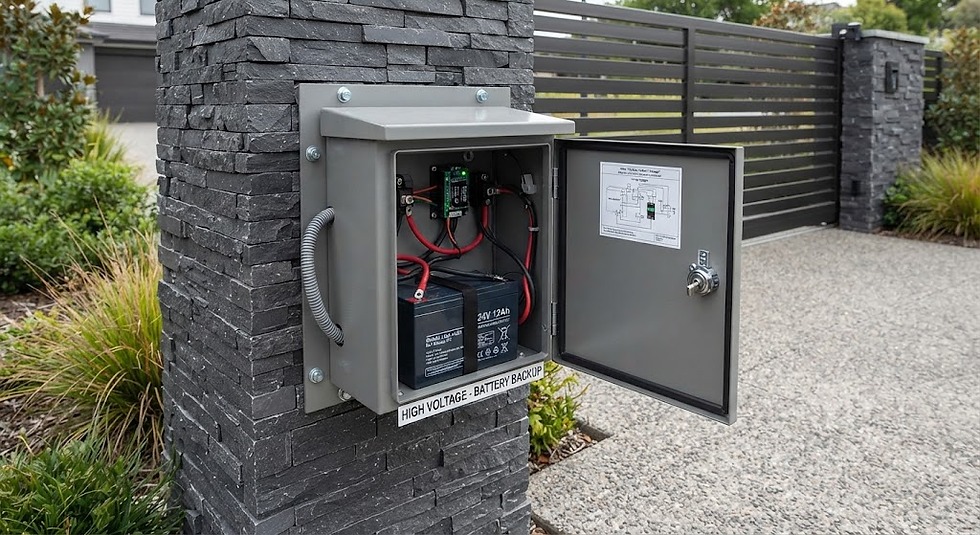
Test Battery Backups: Cut off main electrical power to simulate a grid failure, ensuring your backup battery seamlessly takes over operation without dropping connection.
Inspect Wiring and Conduits: Check visible control board wiring for signs of insect infestation, moisture buildup, or rodent chewing.
Update Smart Access Credentials: Review user lists on your smart intercom for automatic gate app and purge outdated visitor codes, expired contractor PINs, or lost keyfobs.
4. Professional Servicing for Commercial and Heavy-Duty Systems
While DIY upkeep handles basic cleaning and lubrication, commercial automated gate access control systems and heavy industrial sliding gates require bi-annual professional check-ups. Certified technicians can perform deep diagnostic tests on control boards, measure torque limits, and calibrate magnetic locks to ensure peak performance.
5. Year-Round Maintenance Schedule Summary
Monthly: Clean safety sensors, check track clearance, test auto-reverse.
Quarterly: Lubricate moving parts, tighten mounting bolts, check manual override.
Bi-Annually: Test battery backups, inspect control board wiring, audit digital access logs.
Annually: Schedule a comprehensive professional service inspection.
Keep Your Perimeter Secure 365 Days a Year
By following this proactive maintenance checklist, you ensure your gate operates smoothly, resists environmental wear, and provides uninterrupted security for your home or business all year round.


Comments